
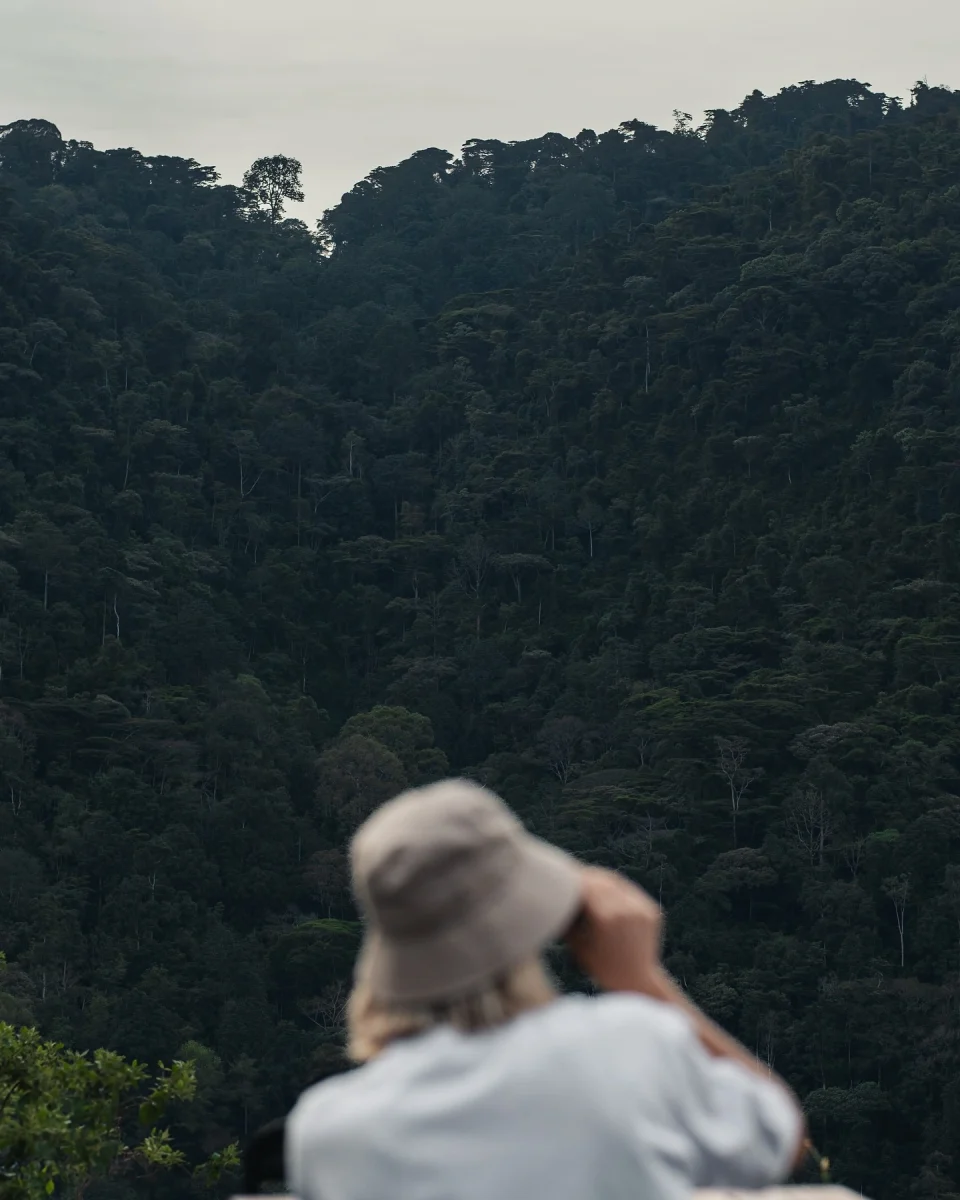
Bwindi Impenetrable Forest – Situated in the rugged highlands of southwestern Uganda, where the vast plains meet the lush mountain forests, Bwindi Impenetrable National Park spans approximately 33,000 hectares of pristine rainforest. Renowned as one of Africa’s richest biodiversity hotspots, the park is home to an extraordinary variety of wildlife and plant species.
It supports more than 200 tree species, over 100 species of ferns, approximately 348 bird species, and more than 200 butterfly species. Bwindi also serves as a critical refuge for numerous endangered animals, most notably protecting nearly 40% of the world’s remaining mountain gorilla population, making it one of the most important conservation areas on the planet.
Bwindi
Bwindi Impenetrable National Park, spanning about 32,092 hectares, is among the most extensive remaining areas of Afromontane lowland forest in East Africa, extending deep into montane forest zones. Situated along the eastern fringe of the Albertine Rift Valley, the park is widely regarded as a Pleistocene refugium and one of the continent’s most important biodiversity hotspots.
It is believed to support possibly the highest concentration of tree species at this elevation in East Africa and hosts an exceptionally rich array of wildlife, including numerous endemic butterflies and one of Africa’s most diverse mammal communities.
The park is globally significant for conserving nearly half of the world’s remaining mountain gorillas, positioning it as a critical stronghold for this endangered species. Surrounded by densely populated agricultural landscapes—among the highest rural population densities in tropical Africa—Bwindi exists as an ecological island of outstanding biological importance.
In this context, community engagement and benefits derived from gorilla tourism and other ecotourism activities are seen as essential for its long-term protection.
Location and Extent
Bwindi Impenetrable Forest is located in Uganda, specifically in the southwestern region along the edge of the Albertine Rift Valley, one of Africa’s most important ecological and geological zones. The park spans parts of three districts: Kanungu, Kabale, and Kisoro, placing it in a highly diverse and densely populated landscape that surrounds the forest.
Geographically, Bwindi lies between approximately 0°53′ and 1°08′ south latitude and 29°35′ to 29°50′ east longitude, positioning it close to the borders with the Democratic Republic of Congo and Rwanda. This location contributes to its rich cross-regional biodiversity, as species from different ecological zones converge within the forest.
Fauna Of Bwindi Impenetrable Forest
Mammals in Bwindi Forest
Bwindi Impenetrable Forest is home to an exceptional diversity of mammals, with more than 120 recorded species inhabiting its dense and varied habitats.
Among the most famous residents are the critically endangered mountain gorillas, which represent nearly half of the world’s remaining population and make the forest globally significant for primate conservation through the gorilla trekking experience
The park also supports other primates such as chimpanzees, L’Hoest’s monkeys, blue monkeys, red-tailed monkeys, and black-and-white colobus monkeys. Larger mammals including African forest elephants, bush pigs, forest hogs, and bushbucks also roam the forest, although they are rarely seen due to the thick vegetation.
In addition, smaller mammals such as bats, rodents, and shrews are widely distributed and play an important role in maintaining the ecological balance of the forest.
Forest Elephants
Bwindi’s forest elephants (Loxodonta cyclotis) are a small, isolated population estimated at 20-30 individuals. Recently recognised as a distinct species from savanna elephants, forest elephants are smaller (shoulder height of about 2.5 metres versus 3.5 metres for savanna elephants), with rounder ears and straighter tusks. They are important seed dispersers and create forest clearings that increase habitat diversity. Though rarely seen, their tracks and dung are commonly encountered on trails.
Primates in Bwindi
Bwindi is one of the few ecosystems in Africa where both mountain gorillas and chimpanzees coexist, making it a globally important primate conservation area. Beyond these great apes, the forest is inhabited by several other primates including olive baboons, vervet monkeys, potto, Demidoff’s dwarf galago, and the spectacled lesser galago.
This remarkable diversity of primates highlights Bwindi’s role as a refuge for species that depend heavily on intact tropical forest ecosystems.
Birds of Bwindi
The forest is equally famous for its rich avian life, with approximately 348 bird species recorded within its boundaries. Many of these species are rare, restricted to the Albertine Rift, or globally threatened, making Bwindi one of Africa’s most important birding destinations.
Notable species include the African green broadbill, Grauer’s swamp warbler, Shelley’s crimson-wing, Turner’s eremomela, Chapin’s flycatcher, Kivu ground thrush, and Lagden’s bushshrike. The presence of such unique and specialized species makes the park a key site for bird conservation and scientific study.
Reptiles and Amphibians
Bwindi Impenetrable Forest also supports a diverse range of reptiles and amphibians that thrive in its moist forest environment. The park is home to around 27 amphibian species, many of which are endemic to the Albertine Rift and adapted to the cool, shaded conditions of the forest floor.
Its reptile population includes various chameleons, lizards, and snakes, with several species found only within Bwindi itself. These species are important ecological indicators, reflecting the health and stability of the forest ecosystem.
Insects and Butterflies
Insects form a vital part of Bwindi’s biodiversity, particularly its butterfly population, which is among the richest in Africa. With more than 200 recorded species, including several endemics, the forest serves as a major refuge for rare and specialized butterflies.
Species such as the African giant swallowtail, cream-banded swallowtail, and Graphium gudenusi highlight the ecological uniqueness of the park. The diversity of insects contributes significantly to pollination and the overall functioning of the forest ecosystem.
Flora Of Bwindi Forest
Bwindi Impenetrable Forest is one of the most botanically diverse forests in East Africa, characterized by a rich mix of lowland and montane vegetation. The forest spans a wide altitudinal range, which creates multiple ecological zones that support an exceptional variety of plant life.
This diversity is further enhanced by its location at the convergence of major ecological regions, allowing both Guineo-Congolian and Afromontane plant species to thrive within the same ecosystem. As a result, Bwindi is often regarded as a living botanical museum with outstanding plant richness.
Tree Species and Forest Structure
The forest contains over 200 species of trees, including several endemic and globally threatened species. These trees form dense, multi-layered canopies that create the characteristic “impenetrable” nature of the forest. Important tree species include Prunus africana, Newtonia buchananii, Symphonia globulifera, Chrysophyllum species, Podocarpus species, and Strombosia scheffleri.
In different altitude zones, certain species dominate, forming distinct plant communities that shape the structure and appearance of the forest. For example, Parinari excelsa dominates lower elevations, while Newtonia buchananii and Chrysophyllum gorungosanum are more common at mid and higher altitudes.
Endemism and Rare Plant Species
Bwindi Impenetrable Forest is especially important for plant conservation because it hosts numerous endemic species found nowhere else in the world. The forest contains at least 10 tree species that are unique to the region, along with several others that have very limited distribution in East Africa.
Some notable endemic and rare plants include Allanblackia kimbiliensis, Croton bukobensis, Grewia milbraedii, and Guarea mayombensis. In addition, species such as African walnut (Lovoa swynnertonii) and Brazzeia longipedicellata are globally threatened, highlighting the forest’s importance as a refuge for rare plant life.
Shrubs, Herbs, and Understory Vegetation
Beneath the towering canopy, Bwindi Forest supports a dense and diverse understory made up of shrubs, herbs, vines, and climbers. This layer contributes significantly to the forest’s impenetrable nature, as thick vegetation restricts movement through many parts of the park.
More than 100 shrub species and a wide variety of herbaceous plants grow in this layer, forming important habitats for insects, birds, and small mammals. The dense understory also plays a key role in soil protection and moisture retention within the ecosystem.
Ferns, Bamboo, and Swamp Vegetation
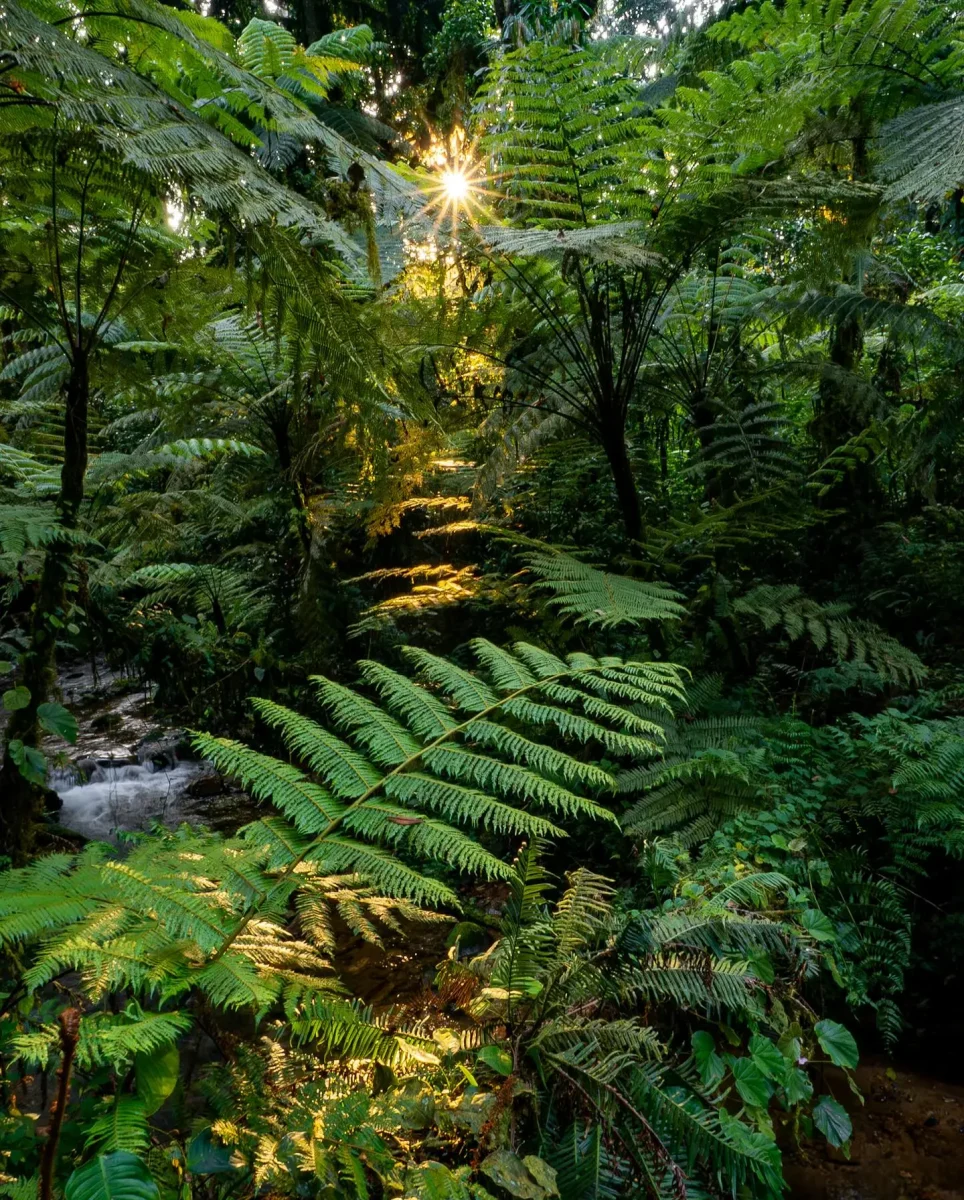
Ferns are particularly abundant in Bwindi forest, with over 100 recorded species thriving in the moist and shaded conditions of the forest floor. Bamboo occurs in smaller patches, covering less than 100 hectares, but it remains an important habitat for several wildlife species, especially mountain gorillas.
In addition, Bwindi contains small swampy areas where specialized plant communities grow, contributing further to the forest’s ecological complexity and habitat diversity.
Flora and Vegetation Zones in Bwindi Impenetrable Forest
Bwindi forest’s 1,447-metre altitudinal range creates five distinct vegetation zones, each with characteristic plant communities and associated fauna.
Lowland Forest (1,160–1,500 m)
Found primarily in the Ishasha Gorge, this zone supports the highest tree diversity and the tallest canopy, reaching 40-50 metres. Dominant species include Cynometra alexandri, Newtonia buchananii, and Parinari excelsa. The understory is rich in ferns, gingers, and orchids. This zone is home to the park’s small population of forest elephants.
Mid-Altitude Moist Forest (1,500–2,000 m)
The dominant vegetation type, covering the largest area of the park and including the forests around Buhoma. Canopy trees include Chrysophyllum gorungosanum, Strombosia scheffleri, and Tabernaemontana holstii. The understory is characterised by dense growth of Mimulopsis, wild bananas (Ensete ventricosum), and tree ferns. Most primate diversity is concentrated in this zone.
Upper Montane Forest (2,000–2,400 m)
Trees become shorter and more gnarled, with heavy moss and lichen cover on trunks and branches. Podocarpus and Rapanea species become important canopy components. Epiphytic orchids, mosses, and ferns are abundant. This zone supports several bird species not found at lower elevations, including the handsome francolin and various Albertine Rift endemics.
Bamboo Zone (2,200–2,500 m)
Pure stands of mountain bamboo (Arundinaria alpina) form a distinctive belt at higher elevations. Bamboo zones are critical habitat for mountain gorillas (who feed on bamboo shoots in season) and the African green broadbill. The bamboo undergoes periodic die-offs followed by mass regrowth, creating dramatic cycles of habitat change.
Afro-Alpine Heath (above 2,500 m)
Found only on the highest ridges, particularly around Rwamunyonyi Peak (2,607 m). Vegetation is stunted, with heather (Erica), tree lobelias, and giant groundsels. This zone occupies a tiny area but supports specialised plant and insect communities not found elsewhere in the park.
The Mimulopsis Phenomenon in Bwindi Impenetrable Forest
One of the most fascinating ecological processes in Bwindi Impenetrable Forest is the natural cycle of a forest understory shrub known as Mimulopsis. This plant forms dense growth across large sections of the forest floor and follows a highly synchronized life cycle that typically lasts between five and seven years.
During this cycle, Mimulopsis plants grow vigorously, then flower all at once across wide areas, produce seeds, and eventually die off simultaneously. This mass die-back has a dramatic impact on the forest environment. Areas that were once thickly covered with undergrowth suddenly become open, allowing sunlight to reach the forest floor and temporarily changing temperature and moisture conditions.
This sudden opening of the forest triggers important ecological changes. Some wildlife species are directly affected; for example, mountain gorillas may move to other areas when their preferred food plants become scarce, while ground-dwelling birds may lose protective cover. At the same time, the newly exposed ground creates opportunities for other plant species to grow, leading to rapid colonization and ecological renewal.
After this open phase, Mimulopsis begins to regrow, quickly forming dense, tangled vegetation once again. Over time, the forest floor returns to its thick, almost impenetrable state, characteristic of Bwindi’s vegetation.
This repeating cycle of growth, die-off, and regeneration plays an important ecological role in the forest. It creates a shifting mosaic of habitats at different stages of regeneration, which helps maintain Bwindi’s exceptional plant diversity and supports a wide range of animal life. In many ways, this natural disturbance cycle is one of the hidden forces that shapes the structure and richness of the forest ecosystem.
Conservation Challenges in Bwindi Impenetrable Forest
Bwindi Impenetrable Forest is globally recognized for its exceptional biodiversity, but this richness also makes it highly vulnerable. As a relatively small and isolated forest surrounded by some of the highest rural population densities in Africa, Bwindi functions as an ecological island with no natural forest corridors linking it to other major forest systems. This isolation limits species movement and increases the risk of long-term genetic and ecological pressures.
One of the most serious emerging threats is climate change. Rising temperatures are expected to alter vegetation patterns, forcing many species to move to higher elevations in search of suitable conditions. This upward shift could compress habitats into smaller areas and, in extreme cases, eliminate high-altitude ecosystems entirely. Species that are adapted to narrow elevation ranges may become trapped in shrinking habitats or eventually run out of suitable living space at mountain peaks.
Human–wildlife conflict is another ongoing challenge for conservation in and around Bwindi. Animals such as baboons, gorillas, and elephants sometimes raid nearby farms, damaging crops and creating tension with local communities. To address these conflicts, the Uganda Wildlife Authority and partner organizations implement measures such as buffer zone management, community education programs, and revenue-sharing schemes that allow local people to benefit from tourism and conservation activities.
Disease transmission between humans and wildlife is also a major concern, particularly for mountain gorillas. Because they share a high percentage of genetic similarity with humans, gorillas are highly susceptible to human diseases, especially respiratory infections. As a result, strict regulations are enforced during gorilla trekking, including maintaining a minimum viewing distance of seven meters and restricting visits from individuals who are ill. These precautions are essential for protecting gorillas and other primates from potentially devastating outbreaks.