
Bwindi Impenetrable Forest is one of Africa’s most celebrated birding destinations and a dream location for ornithologists, wildlife photographers, and bird enthusiasts.
Nestled within the Albertine Rift Valley, the park supports more than 350 bird species, making it one of the richest montane forests for birdlife in Africa. What truly sets Bwindi apart is its remarkable concentration of Albertine Rift endemics—birds found nowhere else or in very few places outside this biodiversity hotspot.
The forest’s varied elevation, dense vegetation, bamboo zones, riverine forests, and high-altitude swamps create an extraordinary range of habitats that sustain both common and exceptionally rare species.
Total Bird Species: 350+
Albertine Rift Endemics: 23 of 37 species
IUCN Red List Species:
Multiple Vulnerable and Near Threatened
Top Target Species:
African green broadbill, Shelley’s crimsonwing
Migratory Season:
November–April (Palearctic migrants)
Birding Trails
Waterfall Trail, Muzabajiro Loop, Buhoma-Nkuringo
Species in a Week:
150–250 typical for dedicated birders
Quick Facts

Albertine Rift Endemic Birds of Bwindi
African Green Broadbill (Pseudocalyptomena graueri)
The African Green Broadbill is the ultimate prize for most birders visiting Bwindi. This elusive forest bird is one of Africa’s rarest species and is largely restricted to the Albertine Rift. It inhabits high-altitude forests and swamp edges, where it quietly forages among moss-covered branches for insects and fruits. Its emerald-green plumage provides excellent camouflage within the forest canopy, making sightings both challenging and incredibly rewarding. The Mubwindi Swamp Trail offers the best opportunity anywhere in the world to observe this remarkable bird.
Shelley’s Crimson-wing (Cryptospiza shelleyi)
Shelley’s Crimson-wing is a shy, brightly coloured finch that inhabits dense montane undergrowth. The striking crimson plumage of the male contrasts beautifully with the deep green forest, although the species is notoriously difficult to observe because it spends much of its time hidden among thick vegetation. Its rarity and restricted range make it one of Bwindi’s most sought-after birds.
Chapin’s Flycatcher (Muscicapa lendu)
This vulnerable species is one of the Albertine Rift’s least frequently encountered birds. Chapin’s Flycatcher prefers mature montane forests, where it patiently hunts insects from exposed branches before darting into the air to catch prey. Its quiet behaviour means it is often detected by experienced bird guides before being seen.
Grauer’s Rush Warbler (Bradypterus graueri)
Found mainly in marshes and swamp vegetation, Grauer’s Rush Warbler is another highly localized Albertine Rift endemic. It is best searched for in the wetland habitats around Mubwindi Swamp, where its distinctive song often reveals its presence before the bird itself emerges from dense reeds.
Grauer’s Rush Warbler (Bradypterus graueri)
Found mainly in marshes and swamp vegetation, Grauer’s Rush Warbler is another highly localized Albertine Rift endemic. It is best searched for in the wetland habitats around Mubwindi Swamp, where its distinctive song often reveals its presence before the bird itself emerges from dense reeds.
Turner’s Eremomela (Eremomela turneri)
Turner’s Eremomela is a tiny, energetic forest warbler that constantly moves through the canopy in mixed feeding flocks. Although small and easily overlooked, it is one of the Albertine Rift’s most treasured endemic species and a rewarding sighting for dedicated birdwatchers.
Mountain Masked Apalis (Apalis personata)
This attractive warbler is recognized by its contrasting facial markings and active feeding behaviour. It is frequently observed moving through the upper canopy in search of insects and is one of Bwindi’s characteristic montane forest birds.
Rwenzori Batis (Batis diops)
The Rwenzori Batis is another Albertine Rift specialty distinguished by its bold black-and-white plumage and striking yellow eyes. It inhabits mature montane forests and is often encountered in mixed-species feeding flocks.
Regal Sunbird (Cinnyris regius)
Often regarded as one of Africa’s most beautiful sunbirds, the Regal Sunbird dazzles with iridescent metallic plumage that glows in shades of emerald, violet, and crimson under sunlight. It feeds primarily on nectar from flowering plants while also consuming insects, making it both an important pollinator and insect predator.
Handsome Francolin (Pternistis nobilis)
True to its name, the Handsome Francolin is one of the most striking ground birds in the Albertine Rift. Its beautifully patterned plumage and preference for dense montane forests make every encounter memorable, although it is more often heard than seen.
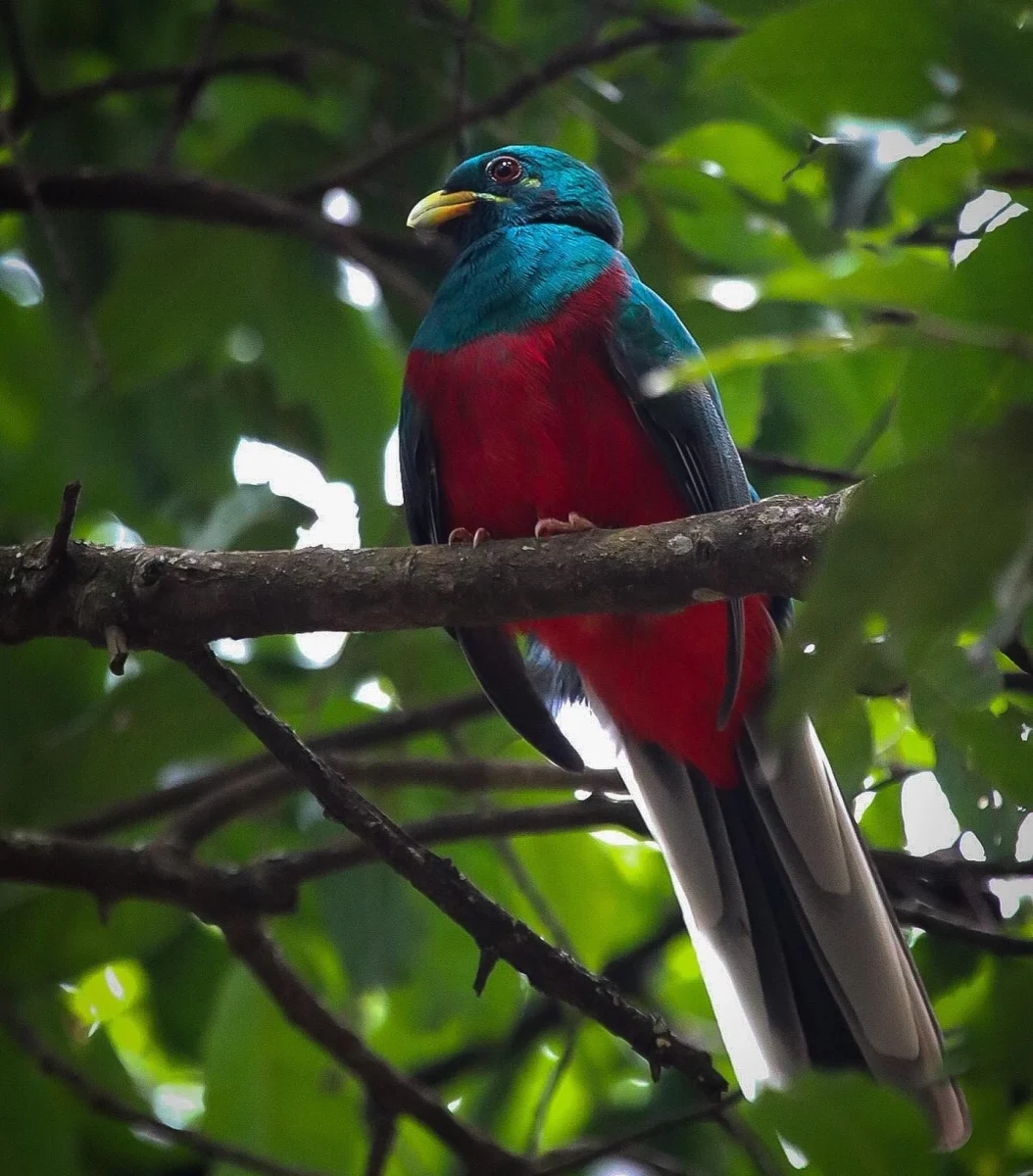
Bar-tailed Trogon (Apaloderma vittatum)
Among Bwindi’s most photogenic birds, the Bar-tailed Trogon displays brilliant green, crimson, and blue plumage. It usually perches quietly beneath the forest canopy, waiting to capture insects or feed on fruits. Its calm nature often allows photographers ample opportunity for spectacular images.
Other Notable Birds of Bwindi
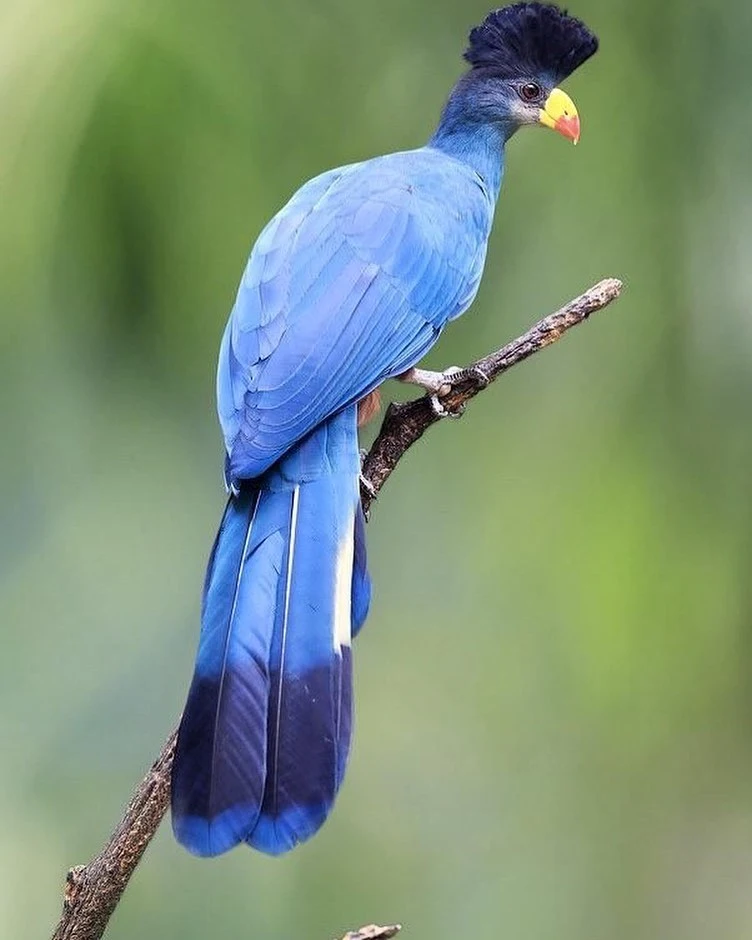
Beyond its endemic treasures, Bwindi supports many remarkable forest species, including the Great Blue Turaco, Black-billed Turaco, White-tailed Blue Flycatcher, Fraser’s Eagle-Owl, Kivu Ground Thrush, White-bellied Robin-Chat, Black Bee-eater, African Emerald Cuckoo, Western Green Tinkerbird, Fine-banded Woodpecker, Yellow-whiskered Greenbul, Red-throated Alethe, Black-faced Rufous Warbler, and the Yellow-eyed Black Flycatcher. Together, these species create one of the richest forest bird communities on the African continent.
African Green Broadbill
Shelley’s Crimson-wing
Chapin’s Flycatcher
Grauer’s Rush Warbler
Turner’s Eremomela
Mountain Masked Apalis
Kivu Ground Thrush
White-bellied Robin-Chat
Red-throated Alethe
White-tailed Blue Flycatcher
Yellow-eyed Black Flycatcher
Black Bee-eater
Fine-banded Woodpecker
Western Green Tinkerbird
Dwarf Honeyguide
Stripe-breasted Tit
Grauer’s Warbler
African Emerald Cuckoo
Collared Apalis
Sharpe’s Apalis
Rwenzori Batis
Regal Sunbird
Blue-headed Sunbird
Purple-breasted Sunbird
Bar-tailed Trogon
Handsome Francolin
Rwenzori Turaco
Great Blue Turaco
Black-billed Turaco
Fraser’s Eagle-Owl
Dusky Crimsonwing
Narrow-tailed Starling
Mountain Oriole
Black-faced Rufous Warbler
Yellow-whiskered Greenbul

Best Birding Spots in Bwindi Forest
Mubwindi Swamp Trail (Ruhija Sector)
Widely regarded as Bwindi’s premier birding trail, the Mubwindi Swamp Trail is the destination every serious birder dreams of visiting. The trail descends through montane forest into a high-altitude swamp that supports many of the park’s rarest species. Birders regularly search this trail for the African Green Broadbill, Grauer’s Rush Warbler, Shelley’s Crimson-wing, Short-tailed Warbler, Regal Sunbird, Rwenzori Batis, Stripe-breasted Tit, Blue-headed Sunbird, Archer’s Robin-Chat, and Bar-tailed Trogon.
Buhoma Waterfall Trail
The Buhoma Waterfall Trail passes through lush riverine and primary forest, offering excellent opportunities for observing both forest specialists and edge species. Regular sightings include Great Blue Turaco, White-tailed Blue Flycatcher, African Emerald Cuckoo, Black Bee-eater, Yellow-whiskered Greenbul, Red-throated Alethe, Black-faced Rufous Warbler, and Western Green Tinkerbird.
River Ivi Trail
The River Ivi Trail connects Buhoma and Nkuringo through mature rainforest and is one of the longest birding routes in the park. The trail is particularly productive for Bar-tailed Trogon, Fine-banded Woodpecker, Western Green Tinkerbird, Mountain Oriole, White-bellied Robin-Chat, and mixed feeding flocks containing greenbuls, flycatchers, and sunbirds.
Bamboo Zone Trail
Located in the higher elevations around Ruhija, the Bamboo Zone Trail offers habitat for birds adapted to montane bamboo forests. Birders frequently encounter Rwenzori Turaco, Dusky Crimsonwing, Stripe-breasted Tit, Mountain Masked Apalis, Regal Sunbird, and Handsome Francolin in this unique ecosystem.
The Neck (Ruhija–Buhoma Road)
“The Neck” is a narrow forest corridor connecting Ruhija and Buhoma and is considered one of Bwindi’s most productive roadside birding locations. Early morning drives often reveal mixed-species flocks containing Rwenzori Batis, Mountain Masked Apalis, Sharpe’s Apalis, Bar-tailed Trogon, Greenbuls, Flycatchers, Sunbirds, and several Albertine Rift endemics.
Why Bwindi Is a World-Class Birding Destination
Although Bwindi Impenetrable National Park is internationally renowned for its mountain gorillas, it is equally celebrated among birdwatchers as one of Africa’s finest birding destinations. The park supports an extraordinary diversity of birdlife thanks to its expansive tropical rainforest, varied habitats, and unique geographical location. Covering approximately 331 square kilometres and ranging in altitude from 1,160 to 2,607 metres above sea level, Bwindi encompasses lowland forests, montane forests, bamboo zones, swamps, and river valleys. These diverse ecosystems provide ideal habitats for hundreds of bird species, making the park one of the richest avian sanctuaries on the continent.
What truly distinguishes Bwindi from other birding destinations is its exceptional concentration of Albertine Rift endemic birds. The Albertine Rift is one of Africa’s most important biodiversity hotspots, and many of its bird species are found nowhere else in the world. Of the 37 Albertine Rift endemic bird species, 23 have been recorded in Bwindi, making the park one of the most significant sites for endemic bird conservation. For bird enthusiasts, this means the opportunity to observe rare and highly sought-after species that cannot easily be seen elsewhere.
Bwindi’s rich birdlife is also supported by its ancient rainforest, which has remained relatively undisturbed for thousands of years. This mature forest provides abundant food sources, nesting sites, and shelter for a wide range of forest specialists, from colourful sunbirds and elusive flycatchers to ground-dwelling francolins and magnificent turacos. The park’s varied elevations also allow birders to encounter different species within relatively short distances, adding to the excitement of every birding excursion.
Among the park’s four tourism sectors, Buhoma, located in the northern part of Bwindi at an elevation of about 1,500 metres, is one of the most popular starting points for birdwatching. The sector provides access to both mid-altitude and lower montane forests through a network of well-maintained nature trails. Even the forest edge near the Buhoma park gate offers excellent birding opportunities, where forest species often mingle with birds of woodland and open-country habitats. Whether exploring the waterfall trails, riverine forests, or nearby forest clearings, birders can enjoy exceptional sightings throughout the day.
With its remarkable diversity, high number of endemic species, experienced local bird guides, and breathtaking rainforest scenery, Bwindi Impenetrable National Park offers an unforgettable birdwatching experience. For anyone passionate about birds, it is not simply a place to observe wildlife—it is one of the world’s most rewarding destinations for discovering some of Africa’s rarest and most beautiful avian species.
Best Time for Bird watching in Bwindi Forest
Birding in Bwindi is rewarding throughout the year, but the dry seasons (June–August and December–February) offer the easiest trail conditions. Many experienced birders also favor November to April, when Palearctic migrants are present and many resident species are breeding, making them more vocal and easier to locate. Regardless of the season, the first few hours after sunrise provide the highest levels of bird activity.