
Mountain gorillas are among the most fascinating primates in the world. Beyond their impressive size, gentle nature and complex social behaviour, they have an equally interesting reproductive system that plays a crucial role in the survival of their endangered population.
From courtship and mating to pregnancy, childbirth, nursing and raising young gorillas, every stage of reproduction is important to the continued survival of mountain gorillas in the forests of Uganda, Rwanda and the Democratic Republic of Congo.
Unlike many other mammals, mountain gorillas have a relatively slow reproductive cycle. Females invest considerable time and energy in raising their offspring, while dominant silverbacks play an important role in protecting their families, maintaining group stability and fathering the next generation.
Understanding how mountain gorillas mate, become pregnant, give birth and raise their young also helps visitors appreciate what they are witnessing during gorilla trekking in Bwindi Impenetrable National Park, Mgahinga Gorilla National Park and Rwanda’s Volcanoes National Park.
This guide explores mountain gorilla reproduction in detail, including their mating behaviour, reproductive maturity, pregnancy duration, birth, infant development, parenting, family structures and the conservation challenges affecting their future.
Understanding the reproductive system of mountain gorillas
Mountain gorillas (Gorilla beringei beringei) reproduce sexually, just like other great apes. Their reproductive biology has several similarities to humans, particularly in the female menstrual cycle, hormonal changes, pregnancy and maternal care.
However, their reproductive patterns are adapted to their social structure and natural environment.
Mountain gorillas do not reproduce rapidly. Females generally give birth to one infant at a time, spend several years nursing and caring for their young, and only give birth again after a relatively long interval.
This slow reproductive process is one of the reasons mountain gorilla populations take a long time to recover when numbers decline.
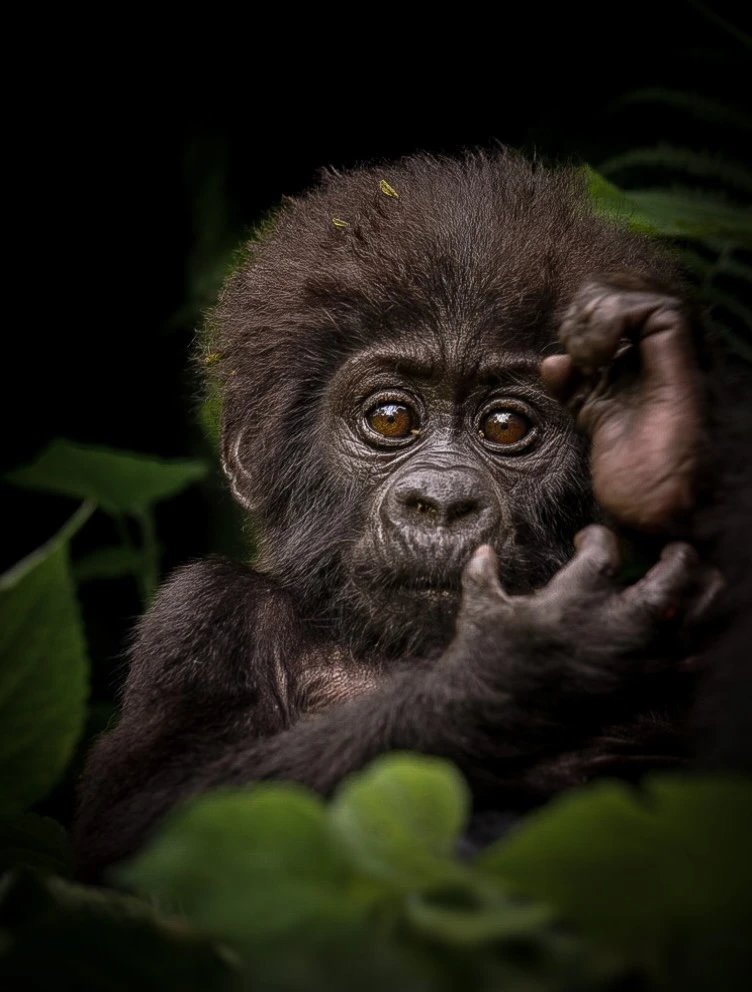
Important reproductive facts
Reproductive characteristic | Mountain gorillas |
Female sexual maturity | Around 6–8 years, with first successful births usually later |
Average age at first birth | Approximately 10–11 years |
Male reproductive maturity | Can begin before adulthood, but successful breeding is generally associated with dominance and maturity |
Female menstrual cycle | Approximately 28–30 days |
Fertile period | Usually a few days around ovulation |
Gestation period | Approximately 255 days |
Pregnancy duration | About 8.5 months |
Babies per pregnancy | Usually one |
Twins | Very rare |
Typical interval between births | Approximately 4–5 years, sometimes longer |
Average weaning age in Bwindi | Approximately 4.8 years |
Breeding season | Throughout the year |
These are general figures rather than fixed rules. Research has established that reproductive patterns differ between the mountain gorilla populations of Bwindi and the Virunga Massif.
At what age do mountain gorillas become sexually mature?
Mountain gorillas do not start reproducing immediately when they become physically mature. Their reproductive development takes several years.
There are important differences between males and females.
Female mountain gorillas
Female mountain gorillas generally begin experiencing reproductive hormonal changes at around six to eight years of age.
However, reaching sexual maturity does not necessarily mean that a female is ready to successfully reproduce.
Young females may experience an adolescent period of relatively low fertility. Although they can show sexual behaviour and mate, they generally have their first successful pregnancy and birth later.
On average, female mountain gorillas give birth to their first offspring at approximately 10 years of age.
A young female may leave the family in which she was born and join another gorilla group or a solitary silverback. This movement helps reduce the possibility of mating with a close relative.
Male mountain gorillas
Male mountain gorillas follow a different developmental path.
Young males are initially known as blackbacks because they have not yet developed the distinctive silver hair across their backs.
As they grow older, their bodies become larger, their muscles develop and they gradually acquire the physical characteristics of adult males.
A male can become sexually capable before reaching full physical maturity. However, being capable of mating does not automatically mean he will have access to females.
In mountain gorilla societies, dominant silverbacks generally have the greatest reproductive opportunities.
Young males often leave their birth groups as they approach adulthood. Some become solitary, while others associate with fellow males until they establish their own groups or attract females.
The silverback’s position is therefore important not only for leadership but also for reproduction and the continuation of the family line.
How do mountain gorillas choose their mating partners?
Mountain gorillas generally live in family groups led by a dominant silverback. A typical group consists of the silverback, several adult females, juveniles, infants and sometimes other adult males.
Their mating system is primarily polygynous. This means one male can reproduce with several females.
The dominant silverback usually fathers most of the infants born within his group.
However, mountain gorilla mating behaviour is more complicated than simply assuming that the male selects a female.
Female choice is an important part of the process.
When a female becomes sexually receptive, she may approach the silverback, remain close to him, make eye contact or display behaviours indicating her interest in mating.
Females can also transfer between groups, meaning they may leave one silverback and join another.
This movement gives females opportunities to choose different social groups and potential reproductive partners.
In groups containing several adult males, the dominant silverback still usually fathers the majority of offspring, although subordinate males can sometimes reproduce.
Research indicates that in multi-male groups, dominant males sire approximately 75% of offspring.
How do mountain gorillas mate?
Mountain gorillas mate through sexual intercourse, and mating is generally a relatively brief activity.
Unlike some other primates, female mountain gorillas do not develop extremely prominent sexual swellings to advertise fertility.
Instead, they display subtle behavioural and physical changes associated with their reproductive cycle.
A female may approach a male, position herself in front of him, maintain eye contact or show other signs of sexual receptivity.
Mating can take place while the gorillas are resting, feeding or moving through the forest.
The dominant silverback is usually the principal mating partner for females within his group.
Does the female initiate mating?
Yes, females can initiate mating.
A female may approach the silverback and display receptive behaviour. The male may then respond by engaging in mating.
However, scientific observations show that mating initiation is not always exclusively controlled by females. Male behaviour, social relationships and dominance can also influence when mating takes place.
Do mountain gorillas mate for pleasure or only reproduction?
Gorilla sexual behaviour is not limited strictly to the moment of conception. Mating behaviour can occur outside the most fertile period of the female’s cycle.
This means that not every mating results in pregnancy.
Researchers studying mountain gorilla reproduction have observed mating behaviour alongside hormonal changes to understand the relationship between sexual activity, ovulation and successful conception.
It is important not to interpret every mating event as evidence that a female has become pregnant.
Do mountain gorillas have a mating season?
One interesting fact about mountain gorillas is that they do not have a specific breeding season.
Unlike some wildlife species that reproduce during particular months of the year, mountain gorillas can mate and give birth throughout the year.
There is no single season when all females become fertile or when most babies are born.
This is possible partly because mountain gorillas live in tropical montane forests where food resources are available throughout much of the year.
Consequently, visitors trekking in Bwindi or Mgahinga at different times of the year may encounter females that are pregnant, mothers nursing infants or groups with newborn gorillas.
There is no particular month that guarantees seeing a newborn gorilla.
The female mountain gorilla's menstrual cycle and fertile period
Female mountain gorillas have a reproductive hormonal cycle similar in several respects to that of humans.
Research on wild mountain gorillas has estimated the average ovarian cycle at approximately 29 days, although individual cycles vary.
During this cycle, hormonal changes prepare the female’s body for possible fertilisation and pregnancy.
What happens during the reproductive cycle?
The cycle involves two major phases:
Follicular phase
During this stage, ovarian follicles develop and produce increasing amounts of oestrogen. One follicle typically matures and releases an egg during ovulation.
Luteal phase
After ovulation, the body produces progesterone, which helps prepare and maintain the uterus for a possible pregnancy.
If fertilisation does not occur, hormone levels change and the cycle begins again.
When is a female mountain gorilla fertile?
A female is most likely to conceive around the time of ovulation.
The period of sexual receptivity is relatively short, usually around one to a few days, although sexual behaviour is not always restricted to this period.
Unlike chimpanzees, female mountain gorillas do not display the large, obvious sexual swellings that make reproductive receptivity easier to identify.
Scientists can investigate their reproductive condition through behavioural observations and hormonal analysis of faecal or urine samples.
One important research finding is that the frequency of ovarian cycles differs between females that have previously given birth and those that have not.
How does a mountain gorilla become pregnant?
Pregnancy begins when a male’s sperm fertilises an egg released by the female during ovulation.
Following successful fertilisation, the developing embryo moves towards the uterus, where it implants and continues developing.
The female’s body then undergoes hormonal changes that support the developing pregnancy.
Mountain gorilla pregnancies are not usually confirmed simply by observing the female’s physical appearance.
Researchers studying habituated gorilla groups can use long-term behavioural records and hormonal analysis to investigate pregnancy.
For example, scientists have successfully used pregnancy-related hormones in urine and faecal samples to detect pregnancies in wild mountain gorillas.
This is particularly important because pregnancy can be difficult to recognise during its early stages.
Not every mating results in conception, and not every detected pregnancy results in a live birth. Research involving wild mountain gorillas has documented pregnancy losses.
How long is a mountain gorilla pregnant?
The gestation period of a mountain gorilla is approximately 255 days, or eight and a half months.
This is relatively close to the human pregnancy period of approximately nine months.
During these months, the developing infant grows inside the mother’s uterus until it is ready to be born.
The mother continues living within her social group, feeding on forest vegetation, moving with the family and participating in normal social activities.
As the pregnancy progresses, her abdomen may become more noticeable, although it can be difficult for visitors to identify pregnancy accurately in the forest.
What happens during the pregnancy?
The developing gorilla passes through several stages:
Early pregnancy: Following fertilisation and implantation, the embryo begins developing its major structures and organs.
Middle pregnancy: The foetus grows, and its body and organs continue developing.
Late pregnancy: The infant gains weight and prepares for birth. The mother’s body undergoes changes associated with labour.
The silverback and other group members continue their normal social activities around the pregnant female.
Unlike humans, mountain gorillas do not have a documented tradition of constructing special maternity areas or leaving their group to give birth.
How do mountain gorillas give birth?
Giving birth is one of the most important moments in the life of a female mountain gorilla.
Most mountain gorilla births result in a single infant. The mother gives birth after approximately eight and a half months of pregnancy.
The newborn is relatively small compared with its mother but is already equipped with the basic instincts needed to survive.
Gorilla births are usually solitary events, meaning the mother delivers the baby without requiring another female to act as a birth attendant.
After delivery, the mother begins caring for her newborn, keeping it close to her body and providing warmth and protection.
Are mountain gorillas born helpless?
Newborn gorillas are dependent on their mothers, but they are not completely helpless.
They possess an instinctive grasping reflex that allows them to hold onto their mother’s body.
However, during the early stages of life, the mother provides almost all the support the infant needs.
She carries the baby, protects it, nurses it and keeps it close as the family moves through the forest.
How much does a newborn mountain gorilla weigh?
A newborn gorilla typically weighs approximately 1.5–2 kilograms, although individual weights vary.
This is remarkably small considering that an adult male mountain gorilla can weigh more than 150 kilograms.
Do mountain gorillas give birth at night?
Births can happen at different times, and there is no reliable rule that mountain gorillas only give birth at night.
Researchers monitoring habituated groups have documented births through continuous observations, but many birth events in wild populations are not witnessed directly.
Do mountain gorillas give birth to twins?
Mountain gorillas normally give birth to one infant at a time.
Twin births are extremely rare, but they have been recorded.
Raising twins presents a considerable challenge for a mother gorilla because both infants require milk, warmth, protection and constant physical attention.
Newborn gorillas depend heavily on their mothers and cannot independently follow the family through the forest.
The mother must therefore manage the demands of caring for two infants while also moving, feeding and maintaining her own health.
Twin births are particularly interesting to researchers because they provide opportunities to study maternal investment, infant survival and the reproductive challenges facing great apes.
It is important to distinguish between a twin birth and two young infants seen together in a gorilla family. The latter may simply be offspring from different mothers.
How does a mother mountain gorilla care for her newborn?
The mother-infant relationship is one of the strongest relationships within a mountain gorilla family.
Immediately after birth, the infant depends on its mother for nearly everything.
The mother holds the baby close to her body, nurses it and protects it from potential dangers.
During the first few months, the infant spends most of its time in physical contact with its mother.
As it grows stronger, it gradually develops the ability to hold on independently and eventually ride on its mother’s back.
Nursing and breastfeeding
Mountain gorilla mothers feed their babies with breast milk.
Nursing provides the infant with essential nutrients and supports its growth and development.
The infant may nurse for several years, even after it has started exploring and eating vegetation.
This extended period of breastfeeding contributes to the long interval between births.
How long do baby mountain gorillas breastfeed?
This is particularly interesting when comparing gorillas from different habitats.
Research conducted in Bwindi found that mountain gorilla infants were weaned at an average age of approximately 57.5 months, equivalent to nearly 4 years and 10 months.
This is longer than the average reported for mountain gorillas in the Virunga Volcanoes, where weaning occurs at approximately 3.3 years.
Therefore, it is not entirely accurate to say that all mountain gorilla babies stop breastfeeding at three years.
The timing varies between individuals and populations.
Researchers have also found that male infants in Bwindi tend to be weaned later than female infants.
How do baby mountain gorillas grow and develop?
Watching a baby mountain gorilla grow is an extraordinary experience.
During the first few years, the infant goes through several developmental stages, gradually becoming more independent.
Newborn stage: 0–3 months
A newborn spends most of its time close to its mother.
It relies on her for warmth, milk, transportation and protection.
Its movements are initially limited, and it spends much of the day sleeping and nursing.
Early infant stage: 3–6 months
As the baby grows stronger, it becomes more active.
It begins developing better coordination and can increasingly hold onto its mother’s body.
It may start making short movements away from the mother while remaining within her reach.
Growing infant: 6–12 months
The baby becomes more curious about its surroundings.
It may begin playing with vegetation, exploring its immediate environment and interacting with other members of the family.
It still relies heavily on breastfeeding and maternal protection.
Juvenile development: 1–3 years
This is a particularly playful period.
Young gorillas become more adventurous and are often seen climbing, chasing one another, wrestling and exploring the forest.
They gradually learn important social behaviours by observing older gorillas.
Although they are increasingly independent, they continue depending on their mothers.
Older juvenile: 3–5 years
The young gorilla becomes more physically capable and increasingly independent.
It can move around with the family, forage on vegetation and interact with other juveniles.
Breastfeeding gradually comes to an end, although the mother-infant relationship remains important.
Adolescent stage
As the gorilla grows older, it develops the physical and social characteristics of an adult.
Young females may eventually transfer to another group, while young males develop into blackbacks and later silverbacks.
Developmental ages are approximate, and individual gorillas do not all follow precisely the same timetable.
How often do female mountain gorillas give birth?
One of the most remarkable things about mountain gorilla reproduction is the long interval between births.
A female mountain gorilla typically gives birth once every four to five years, although some females have longer intervals.
This is because raising a young gorilla requires a considerable investment of time and energy.
After giving birth, the mother spends several years nursing, carrying and protecting her infant.
Her reproductive cycle may also remain suppressed during the period of intensive nursing. Eventually, she resumes regular ovarian cycling and can become pregnant again.
Why don’t mountain gorillas give birth every year?
There are several reasons:
Long pregnancy: A female carries her developing baby for approximately eight and a half months.
Extended breastfeeding: Infants may continue nursing for three to nearly five years, particularly in Bwindi.
Maternal investment: Young gorillas need years of care before becoming sufficiently independent.
Reproductive recovery: The female must resume ovarian cycling and successfully conceive again.
In Bwindi, research has recorded an average interval of approximately 5.1 years between births, compared with approximately 4.2 years in the Virunga Massif.
This is an important difference that makes Bwindi particularly interesting for researchers studying mountain gorilla reproduction.
How many babies can a female mountain gorilla have in her lifetime?
Female mountain gorillas generally have relatively few offspring during their reproductive lives.
If a female has her first baby at around 10 years old and gives birth every four to five years, she may produce several offspring throughout adulthood.
However, the number of babies she gives birth to is not necessarily the same as the number that survive to adulthood.
Some infants die during their early years, while others successfully grow into independent juveniles and adults.
A female’s reproductive history is influenced by her age, health, social circumstances, successful pregnancies and the survival of her previous offspring.
This low reproductive rate makes every successful birth important to the conservation of mountain gorillas.
What role does the silverback play in raising baby gorillas
The silverback is much more than the male responsible for reproduction.
He is generally the leader, protector and central figure of the family group.
Although the mother performs most of the direct infant care, the silverback contributes significantly to the social environment in which young gorillas grow.
Protection of infants
The silverback protects the group against external threats, including rival gorillas and potential predators.
His large body, strength and intimidating displays help discourage intruders.
Social interaction
Silverbacks are often observed resting close to younger members of their families.
Some develop particularly strong relationships with infants and juveniles, allowing them to play nearby, climb on them or remain close while resting.
Maintaining group stability
A stable family environment is important for infant survival.
The silverback’s leadership helps maintain group cohesion, resolve conflicts and coordinate the group’s movements through the forest.
Does the silverback know which babies are his?
In many cases, the dominant silverback fathers most infants born in his group.
In groups containing multiple adult males, however, paternity is not always obvious from observation alone.
Scientific genetic studies and long-term behavioural records help researchers understand which males father particular offspring.
The silverback may also protect infants that are not biologically his, particularly in groups where several adult males live together.
Can a new silverback kill baby mountain gorillas?
This is one of the more difficult aspects of mountain gorilla social behaviour.
In some circumstances, when a new male takes over a gorilla group, he may kill infants fathered by the previous dominant male.
This behaviour is known as infanticide.
It is associated with reproductive competition because the death of an unweaned infant may allow its mother to resume reproductive cycling sooner, creating an opportunity for the incoming male to father her next offspring.
However, infanticide is not an inevitable part of every silverback takeover.
Its occurrence depends on the circumstances surrounding the group, the infant’s age, the mother’s behaviour and the social relationships between the males.
There are also situations in which females transfer to other groups with their infants, and the new male accepts them.
This is one reason why female mountain gorillas sometimes change family groups.
It is important to understand that mountain gorilla groups are complex social communities. Not every male behaves in the same way, and many silverbacks show protective and tolerant behaviour towards infants.
Researchers have documented infanticide in mountain gorillas, particularly in the Virunga population, although it should not be presented as a universal behaviour across every group.
Do mountain gorillas experience miscarriages or stillbirths?
Yes. Not every pregnancy results in the birth of a healthy infant.
Just like humans and other mammals, mountain gorillas can experience pregnancy loss.
A study of wild mountain gorillas in Rwanda monitored reproductive hormones in 16 females. Researchers detected five pregnancies, but only three resulted in live births.
This demonstrated that pregnancy loss can occur in wild gorilla populations.
Possible factors affecting pregnancy outcomes include maternal health, reproductive physiology, age and environmental or social conditions.
However, it is important not to attribute a particular miscarriage to a specific cause without evidence.
In the wild, pregnancy losses may also go unnoticed unless researchers have been closely monitoring the female.
Can mountain gorillas reproduce throughout their entire lives?
Female mountain gorillas can remain reproductively active into relatively advanced ages.
Unlike humans, there is no clearly established universal age at which wild female gorillas experience menopause.
Research on wild mountain gorillas has found that female fertility does not necessarily decline in an obvious way with age.
However, reproductive ability varies between individuals, and older females may have different reproductive histories.
Their ability to become pregnant and successfully raise offspring depends on several biological and social factors.
Male reproductive opportunities can also continue into old age, particularly for silverbacks that maintain their dominant positions.
An older silverback that remains the leader of a stable family group may continue fathering offspring.
What happens when a young mountain gorilla becomes an adult?
As young mountain gorillas mature, their relationships with their families gradually change.
The transition to adulthood is particularly interesting because males and females generally follow different paths.
Female gorillas leaving their birth families
Female mountain gorillas often leave their natal groups as they approach adulthood.
They may join another established family or transfer to a solitary male.
This behaviour helps prevent close-relative mating and provides opportunities to reproduce with males from different family lines.
Male gorillas leaving their birth families
Young males often leave their birth groups as they approach adulthood.
They may live alone, associate with other males or eventually establish their own family groups.
A young male that becomes a silverback may attract females and establish a new family.
What happens to a silverback’s sons?
Not all young males leave immediately, and some may remain in their birth group for a period.
In multi-male groups, subordinate males may coexist with the dominant silverback.
They may eventually leave, establish their own groups or, in some circumstances, become dominant within the existing family.
This process contributes to the social organisation and genetic diversity of mountain gorilla populations.
How does mountain gorilla reproduction differ between Bwindi and the Virunga Mountains?
This is a particularly valuable topic for an article focusing on Uganda because mountain gorillas in Bwindi and those in the Virunga Massif do not have identical reproductive patterns.
Although they belong to the same subspecies, research has identified differences in the timing of weaning and the intervals between births.
A 2023 scientific study comparing female gorilla life-history patterns at Bwindi and the Virunga Massif reported the following averages:
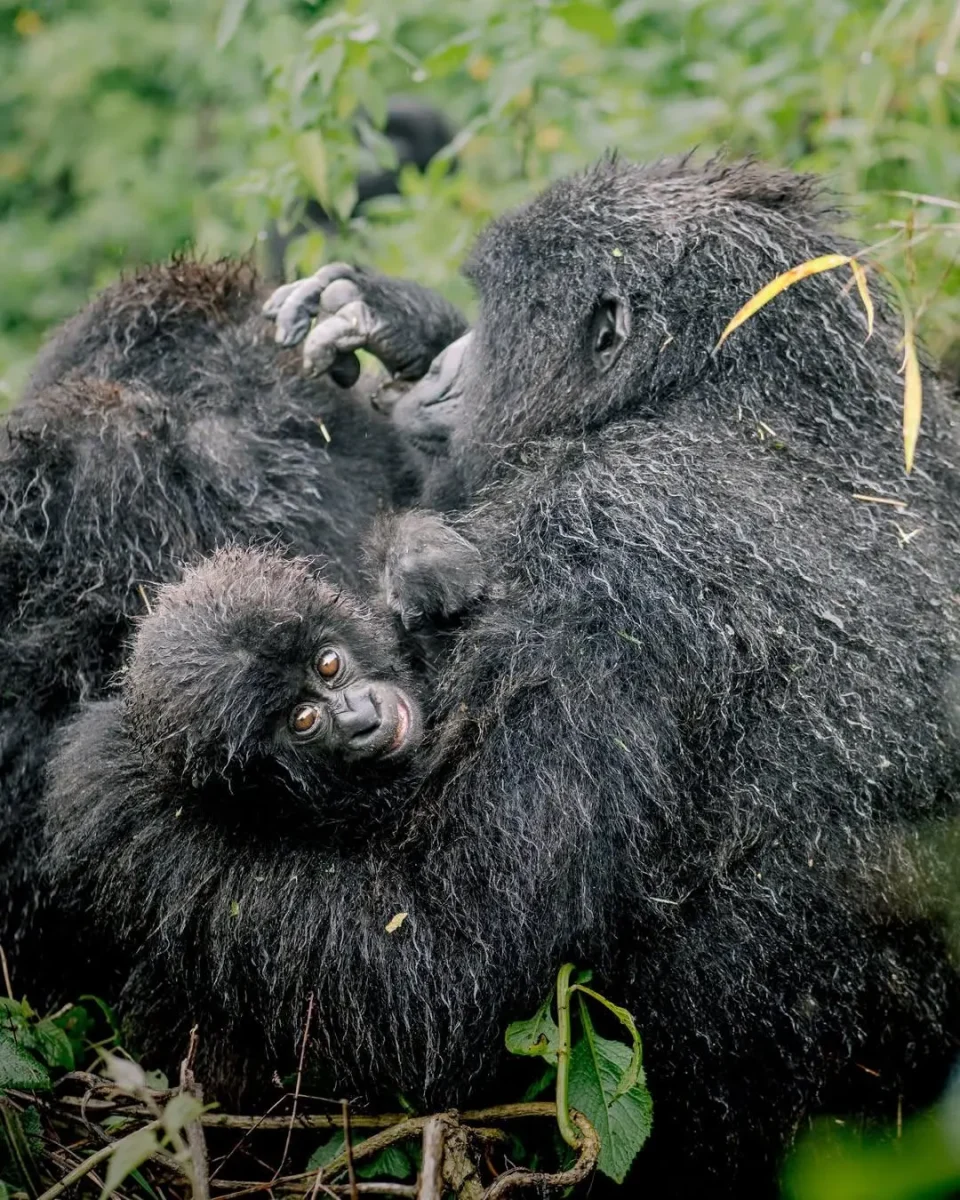
Reproductive characteristic | Bwindi | Virunga Massif |
Age at first birth | 10.5 years | 10.1 years |
Age at weaning | 4.5 years | 3.3 years |
Interval between births | 5.1 years | 4.2 years |
Age when females leave their birth group | 7.9 years | 8.3 years |
Figures are population averages from different research datasets, not fixed biological rules.
The findings suggest that Bwindi females generally nurse their offspring longer and have longer intervals between births than their counterparts in the Virunga Massif.
Researchers have explored several possible explanations, including differences in feeding ecology, food availability, energy balance and social conditions.
Bwindi gorillas also consume a greater proportion of fruit than the Virunga mountain gorillas, although both populations depend heavily on forest vegetation.
These differences demonstrate that even mountain gorillas living within relatively close geographical regions can have distinct reproductive patterns.
Why is mountain gorilla reproduction important for conservation?
Mountain gorillas are endangered great apes whose survival depends on successful reproduction, suitable habitats and effective conservation.
Their slow reproductive rate means population recovery cannot happen overnight.
A female may spend approximately five years raising one infant before giving birth again.
If an adult female dies, the population loses not only one individual but also the potential offspring she could have produced throughout her remaining reproductive life.
Similarly, the loss of a dominant silverback can disrupt an entire family group and potentially expose infants to social instability.
Habitat loss and fragmentation
Deforestation, agricultural expansion and human settlement can reduce the available habitat for mountain gorillas.
When forest habitats become fragmented, gorilla groups may experience greater pressure on their feeding areas and movement corridors.
Protecting their habitat is therefore essential for successful reproduction and long-term population survival.
Diseases
Mountain gorillas share a high proportion of their genetic characteristics with humans, making them vulnerable to some human infectious diseases.
Respiratory infections are a particular concern.
Responsible tourism, visitor health screening, minimum viewing distances and strict hygiene measures help reduce the risk of disease transmission.
Human-wildlife conflict
As human populations expand around protected forests, interactions between communities and wildlife can increase.
Conservation organisations and park authorities work with surrounding communities to reduce conflict and encourage sustainable coexistence.
Responsible gorilla tourism
Gorilla trekking generates revenue that supports protected-area management and conservation activities.
It also creates employment for local guides, trackers, porters, rangers and community members.
However, tourism must be carefully managed to protect the health and welfare of gorillas, especially mothers and young infants.
The future of mountain gorillas depends on protecting not only the adults but also the next generation.
Can visitors see pregnant mountain gorillas during gorilla trekking?
Yes. Visitors trekking in Bwindi Impenetrable National Park, Mgahinga Gorilla National Park or Rwanda’s Volcanoes National Park may encounter females that are pregnant.
However, pregnancy is not always easy to recognise from a distance, especially during the early stages.
Visitors are more likely to notice mothers carrying young infants, juveniles playing around their mothers or females resting with other members of their family.
One of the most beautiful experiences during gorilla trekking is observing the relationship between mothers and their babies.
You may see an infant clinging to its mother’s chest, nursing, sleeping on her body or riding on her back as the family moves through the forest.
Sometimes, young gorillas playfully interact with one another while their mothers feed nearby.
These natural family interactions offer a fascinating glimpse into the social and reproductive lives of mountain gorillas.
Can you see a gorilla giving birth during trekking?
Gorilla trekking is not designed to observe childbirth.
Births are unpredictable, and visitors should never attempt to approach or disturb a female that may be giving birth.
Park authorities and guides follow strict wildlife-viewing regulations to protect gorillas, their infants and the rest of the group.
The most responsible way to appreciate gorilla reproduction is to observe their natural behaviour without interfering.