
Which Bwindi Gorilla Sector Is Best?
June 16, 2026
New Monkey species in DR.Congo
July 16, 2026Bwindi Forest Name Origin –The Haunting legend of Nyinamukari, the swamp spirit and how a tragic sacrifice gave name to one of Africa’s Ancient forests.
The Legend in a Nutshell

Bwindi Forest Name Origin - The story Behind The Famous Name
The Great Migration from Southern Kisoro
Among the many stories preserved in the oral traditions of southwestern Uganda, few are as powerful and enduring as the legend of Nyinamukari. It is a story of migration, sacrifice, survival, and the mysterious forces that local communities believed inhabited the ancient forests and wetlands of the region. Although historians generally explain the name Bwindi as deriving from the Runyakitara word Mubwindi, meaning a dark, obscure, or impenetrable place, local tradition offers a far more dramatic account. According to this legend, the name originated from a tragic event involving a young woman named Nyinamukari, whose sacrifice forever changed the way people viewed the forest and swamplands that would eventually become part of Bwindi Impenetrable National Park.
The story begins roughly a century ago, during a period when families from the densely populated highlands of southern Kisoro were migrating in search of new land. Population growth had placed immense pressure on available farmland, forcing many clans to venture into unfamiliar territories where fertile soils remained abundant. Among these migrants was a family belonging to the Abarenje clan. Like many others seeking a better future, they packed their belongings and set off on foot toward the northern plains of Kayonza, a region known for its agricultural potential.
Their journey was neither easy nor predictable. Long before the construction of roads and modern infrastructure, travelers navigated dense forests, steep hillsides, deep valleys, and extensive wetlands. Every migration carried risks from wild animals, disease, hunger, and the uncertainty of the unknown. Nevertheless, the promise of fertile land was strong enough to compel families to leave behind familiar homes and venture into the wilderness.
The Swamp That Refused Passage
After many days of travel through thick forest, the Abarenje family arrived at the edge of an enormous swamp. From a distance it appeared to be another obstacle that could be crossed with patience and determination. However, as they stepped into the wetland, they quickly realized that this was no ordinary swamp.
The ground beneath them shifted and trembled with every movement. Thick mud and waterlogged vegetation swallowed their feet and legs. Each attempt to move forward only caused them to sink deeper. The swamp seemed alive, resisting every effort to cross it. What initially looked like a manageable route soon became a terrifying trap.
Unable to advance and unwilling to retreat through the wilderness they had already traversed, the family found themselves stranded at the swamp’s edge. For two agonizing days they remained there. Their food supplies dwindled, exhaustion set in, and fear began to overshadow hope. Every attempt to force a crossing ended in failure. The swamp simply would not permit them passage.
To the people of the time, such unexplained natural phenomena were rarely viewed as accidents of geography. Forests, rivers, mountains, caves, and swamps were often believed to be inhabited by powerful spiritual beings whose favor or anger could influence human affairs. The unusual behavior of the swamp convinced the family that supernatural forces were at work.
The Voice from the Waters
As desperation grew, the parents turned to prayer. They called upon the spirits believed to inhabit the swamp, pleading for mercy and safe passage. According to the legend, their prayers were answered in a manner both miraculous and terrifying.
From the depths of the swamp came a mysterious voice. The unseen spirit acknowledged their suffering and offered them a solution. The family would be allowed to cross safely, but only on one condition. They had to sacrifice their most beautiful and beloved daughter, a young virgin named Nyinamukari.
The demand struck the family with horror. Nyinamukari was not merely one of their children; she was treasured by her parents and admired by those around her. In many versions of the story, she is described as exceptionally beautiful, kind-hearted, and innocent. The thought of surrendering her to the dark waters was unimaginable.
The parents immediately refused. Surely there had to be another way. They pleaded with the spirit to accept livestock, food, or some other offering. Yet the spirit remained firm. No substitute would be accepted. Only Nyinamukari could satisfy the demand.
For two days the family wrestled with this impossible choice. They remained trapped between life and death, unable to move forward and unable to return. Every hour deepened their despair.
The Agonizing Decision
As the days passed, reality became increasingly grim. Hunger weakened the family. Their strength faded. Hope of escape diminished. The wilderness around them offered no assistance, and the swamp remained impassable.
The parents faced a dilemma that no parent should ever endure. To reject the spirit’s demand might mean the death of the entire family. To accept it meant sacrificing the child they loved most. The emotional weight of the decision was almost unbearable.
According to the legend, survival eventually overcame resistance. Convinced that they had exhausted every alternative, the family reluctantly agreed to the spirit’s terms. Their decision was not born of cruelty but of desperation. They believed they were choosing between the life of one child and the extinction of the entire family.
With profound grief, they led Nyinamukari to the edge of the swamp. The young woman understood the fate awaiting her. In some retellings, she accepts her destiny with remarkable courage, recognizing that her sacrifice might save her family. In others, the event is portrayed as a heartbreaking act of helplessness and despair.
Whatever the version, the ending remains the same. Nyinamukari was cast into the dark waters and disappeared beneath the surface.
The Miracle
The sacrifice had barely been completed when something extraordinary occurred.
The swamp that had trapped the family for days suddenly changed. The shifting mud became firm. The turbulent waters calmed. A stable pathway appeared where moments before there had been only danger and uncertainty.
The transformation was so immediate and dramatic that it could only be understood as a supernatural response. The spirit had fulfilled its promise.
The family cautiously tested the newly opened route and discovered that it could be crossed safely. With heavy hearts and overwhelming sorrow, they made their way through the swamp and continued their journey northward.
Although they had survived, the cost of their survival was immeasurable. The memory of Nyinamukari’s sacrifice would accompany them for the rest of their lives.
The Birth of “Mubwindi bwa Nyinamukari”
News of the event spread rapidly throughout neighboring communities. Stories traveled quickly in traditional societies, especially when they involved encounters with powerful spirits and unexplained phenomena. As the tale passed from village to village, it became embedded in local memory.
People became convinced that the swamp was inhabited by forces capable of demanding human sacrifice. Fear of the area grew steadily. Travelers avoided it whenever possible. Hunters sought alternative routes. Parents warned their children never to wander near the wetlands. The swamp acquired a reputation as a place of danger, mystery, and supernatural power.
In remembrance of the tragedy, people began referring to the area as Mubwindi bwa Nyinamukari, commonly interpreted as “the dark place of Nyinamukari” or “Nyinamukari’s place of darkness.” The name carried meanings that extended beyond physical darkness. It reflected the emotional darkness of the family’s loss, the spiritual darkness associated with the feared swamp spirits, and the deep sense of sorrow that surrounded the story.
The phrase became a permanent reminder of the young woman whose life had been exchanged for safe passage through the wilderness.
From Mubwindi to Bwindi
As generations passed, the original phrase gradually became shortened in everyday speech. People increasingly referred to the area simply as Mubwindi. The name was eventually applied not only to the swamp itself but also to the dense forest surrounding it.
This evolution was reinforced by the nature of the landscape. The forest was extraordinarily thick, with towering trees, tangled vines, dense undergrowth, and a canopy so heavy that sunlight struggled to penetrate to the ground. Travelers entering the forest often found themselves enveloped in shadows even during the brightest hours of the day.
The word Mubwindi perfectly captured the experience of moving through such terrain. It described a place that was dark, mysterious, and difficult to penetrate. Over time, common usage shortened the name even further, eventually producing the modern form: Bwindi.
Thus, the legend of Nyinamukari became intertwined with the physical characteristics of the forest itself. The story explained the emotional and spiritual significance of the name, while the landscape provided a visible expression of the darkness and mystery that the name evoked.
Colonial Recognition and Official Adoption
The transition from local place name to official designation occurred during the colonial era. In 1932, British colonial authorities gazetted the surrounding forest as Crown Forest Reserves. As administrators documented the geography of the region, they frequently adopted names already used by local communities.
By that time, the name Bwindi had become deeply established in local usage. The forest reserve inherited the name, ensuring that it would appear on maps, official documents, and government records. What had once been a local reference to a feared swamp and its tragic legend became the recognized name of an entire forest ecosystem.
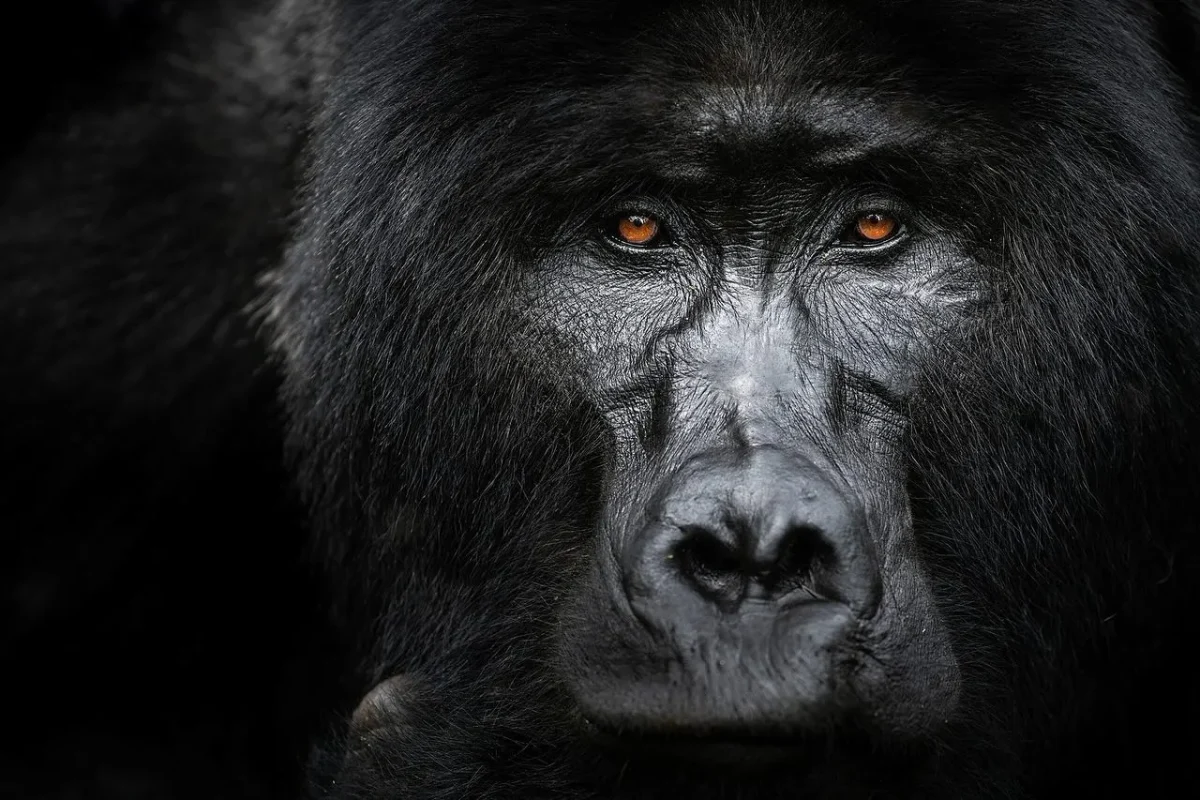
Decades later, conservation efforts led to the creation of Bwindi Impenetrable National Park in 1991. Today, the park is internationally renowned for its biodiversity and for sheltering nearly half of the world’s remaining mountain gorillas. Yet despite its global fame, the ancient story associated with its name continues to survive among local communities.
Whether Nyinamukari was an actual historical figure can never be established with certainty. Like many oral traditions across Africa, the story exists in the space between history, memory, spirituality, and cultural identity. Its value lies not necessarily in proving historical facts but in preserving how communities understood and related to their environment.
The legend reflects a world in which nature was not merely a physical landscape but a living realm inhabited by spiritual forces. It captures the dangers faced by early migrants, the difficult choices required for survival, and the profound respect that people held for forests, wetlands, and other powerful features of the natural world.
Today, visitors from around the globe travel to Bwindi to encounter mountain gorillas and experience one of Africa’s most remarkable rainforests. Yet beneath the scientific significance and conservation success of the park lies an older narrative that continues to resonate. The name Bwindi is more than a geographical label. For many local people, it carries the memory of a young woman named Nyinamukari, whose tragic sacrifice became forever linked to a place of mystery, fear, and enduring cultural significance.
In local tradition, every mention of Bwindi still echoes the ancient phrase from which it is believed to have emerged: Mubwindi bwa Nyinamukari—the dark place of Nyinamukari.